Buckminster Fuller’s epiphany


The impact of accurate war reporting on the prevalence of war has been overstated by some. It is more important to address how we have been conditioned to perceive all information – including information about war – through cultural filters which promote a violent response to problems; and how we tend to adopt a current-timeframe specific understanding of the experience of war rather than the eternal and universal experience of war.
After hearing Philip Gibbs recount his experiences of the Western Front in WW1, Prime Minister David Lloyd George said, “If people really knew [the reality], the war would be stopped tomorrow, but of course they don’t know and can’t know. The correspondents don’t write and the censorship wouldn’t pass the truth. What they do send is not the war, but just a pretty picture of the war with everybody doing gallant deeds.”[1] But was Lloyd George’s hypothesis correct?
The effect of accurate reporting on the political decision-making process leading up to the launch of a new war is highly debatable. Leonard Downie Jr., Executive Editor of the Washington Post when the 2003- Iraq War began: “People who were opposed to the [2003- Iraq] war from the beginning and have been critical of the media’s coverage in the period before the war have this belief that somehow the media should have crusaded against the war. They have the mistaken impression that somehow if the media’s coverage had been different, there wouldn’t have been a war.“[2]
Accurate reporting of war does not guarantee any sort of public outcry – “information by itself has neither meaning nor consequences – both are created only through the active reception and through the scope of action of the audience.” Some people might respond emotionally to the information, but “compassion is an unstable emotion. It needs to be translated into action, or it withers.” And when action does occur, it is not necessarily action which supports the ending of war.
For accurate reporting of war to lead to less war a number of factors would need to be present:
Some thoughts on these factors follow with the conclusion that items 1 to 3 are not the prime concern of the average person, whereas items 4 and 5 are. The suggestion is that an educational response is perhaps the most effective response, while being the most often overlooked.
The commercialisation of the media, particularly since the 1980s, has changed the balance of power strongly in favour of governments and their agencies, especially when it comes to war reporting which is expensive and requires access to be granted by the government to reporting locations. Carne Ross, Foreign Office diplomat at the time of the 2003- Iraq War: “We would control access to the foreign secretary as a form of reward to journalists. If they were critical, we would not give them the goodies of trips around the world. We would feed them factoids of sanitised intelligence, or we’d freeze them out.”
Embedding journalists in military units began for mostly positive reasons. The 1991 coalition war against Iraq had very little media coverage, so embedding journalists was a way to secure footage while affording journalists protection. But as research shows, where journalists become “embedded” and are allowed privileged access to the frontline they tend to reciprocate by adopting the government’s line. It prevents reporting on the war from all angles, and the biases of the limited sources are inherited by the reporters. The physical protection afforded to the journalist creates a social transaction in which the reciprocation is a favourable write-up [ref].
Non-compliant journalists are not just frozen out. Rageh Omaar: “I happen to be the only journalist in the world that has seen the bombing of Al Jazeera Arabic’s bureaus in both Kabul in 2001 and in Baghdad in 2003. The case of the bombing of the Al Jazeera office in Kabul was without doubt and categorically a direct targeting of those journalists to shut them up and possibly kill them…that was a clear targeting of a journalistic organisation and personnel to get them off the air”. The US Government admitted the Kabul attack was deliberate. It has denied deliberately targeting Al Jazeera’s office in Baghdad in 2003 but there is evidence that George Bush and Tony Blair discussed a plan to bomb Al-Jazeera prior to the 2003 attack. Aidan White of the International Federation of Journalists: “The evidence is stacking up to suggest that the US decided to take out Al-Jazeera in Baghdad, as a warning not only to them but to other media about their coverage. If true, it is an absolute scandal that the US administration can regard the staff of Al-Jazeera as a bunch of terrorists and a legitimate target“. Whilst the coalition governments silence non-conforming journalists, the U.S. State Department claims “On Iraq, they [Al Jazeera] have established a pattern of false reporting.“
The extreme violence and the destruction of social networks and public and media services within Iraq kept many civilian stories hidden from the world. We saw the images the coalition government wanted us to see – the fireworks, the shock and awe, the arrests of enemy combatants, the toppling of statues, the corpse of Saddam Hussain. To see more of the picture we have to seek out material captured by the likes of documentary maker Mark Manning, the work of photojournalists like Anja Niedringhaus, the stories of families trying to find the bodies of their dead relatives, and the writings from Operation Homecoming:
March 29. The old Navy jargon “belay my last,” meaning disregard my last statement, applies to my commentary from yesterday. We got creamed with fresh casualties last night, thirty new patients, both sides, all needing immediate and significant intervention. The injuries are horrifying. Ruptured eyeballs. Children missing limbs. Large burns. Genitals and buttocks blown off. Grotesque fractures. Gunshot wounds to the head. Faces blown apart. Paraplegics from spine injuries. The number of X-ray studies performed last night in a short period of time is so great that it causes the entire system to crash under the burden of electronic data it is being fed.

Image from leaked MoD document: Stability Operations in Iraq, (OP TELIC 2-5), An Analysis from a Land Perspecitve
To the traditional crafts of reporting and documentary making we can add the leaking of information by whistle-blowers. The leaked war logs of the coalition troops provide brutal written vignettes – which the public were never supposed to see – of the reality of the war. They also document 66,081 civilian deaths between 2004 and 2009 (as a result of inaccurate reporting in the media and the refusal of governments to acknowledge specific death toll data, 59% of people in the UK think that less than 10,000 Iraqis were killed in the 2003- war) [3].
Perhaps surprisingly, the war logs are rarely about coalition troops killing insurgents. More often it is children and babies killed in collisions with coalition vehicles, described in economic sentences punctuated with military acronyms:
“253RD TRANS CONVOY STRUCK AN IZ (Iraqi) CHILD ON Route GINGER (MC4128550637). THE CHILD HAD NO PULSE. AWAITING DISPOSITION OF REMAINS.” [ref]
“AT 1600C, A MSG (Equipment: 8) WAS DRIVING THE LEAD NTV IN A TWO-VEHICLE CONVOY RETURNING FROM A SCHOOL OPENING. HE WAS TRAVELING ON THE MAIN HIGHWAY SOUTH OF SHAQLAWA WITH THREE OTHER PERSONNEL. THE MSG ATTEMPTED TO PASS A VEHICLE ON THE LEFT SIDE. HE MISJUDGED A VEHICLE APPROACHING FROM THE OPPOSITE DIRECTION. HE SWERVED LEFT TO AVOID THE VEHICLE BUT HIT THE FRONT LEFT BUMPER AREA OF THE ONCOMING CIVILIAN VEHICLE HEAD ON. THE IMPACT TOTALED THE CIVILIAN VEHICLE AND SUBSTANTIALLY DAMAGED 426CAS NTV. 5X ADULTS AND 1X 6 MONTH OLD CHILD WERE IN THE CIVILIAN VEHICLE. THEY WERE ALL EXTRACTED FROM THE VEHICLE AND TRANSPORTED IN CIVILIAN VEHICLES TO IRBIL EMERGENCY HOSPITAL WITH SERIOUS INJURIES. THE 4X INDIVIDUALS IN THE 426CA NTV WERE ALSO EVACUATED TO THE HOSPITAL. AT 1819, THE UNIT LEARNED THROUGH A SECONDARY SOURCE THAT THE CHILD DIED FROM INJURIES. THE REMAINING ADULTS WERE TREATED FOR INJURIES AND WERE KEPT OVER NIGHT AT THE HOSPITAL.” [ref]
Or it is innocent Iraqi citizens killed or injured by return fire…
“AT 2108C, A/1-32 WAS CONDUCTING A DISMOUNTED PATROL ALONG ASR JACKSON (vicinity 38S MB 4128 4459) WHEN THEY OBSERVED A TEENAGE MALE WITH AN Assault rifle. THE PATROL DECLARED THAT THEY WERE A Coalition Forces PATROL IN ENGLISH AND AGAIN IN ARABIC. THE YOUNG MAN THEN OPENED FIRE ON THE PATROL. THE PATROL RETURNED FIRE WOUNDING THE YOUNG MAN. AFTER THE CONTACT, THE PATROL DISCOVERED THEY HAD ALSO WOUNDED A PREGNANT FEMALE AND HAD KILLED A SMALL CHILD. THE PATROL TREATED THE WOUNDED AND GROUND Evacuation’D THEM TO Forward Operating Base CHOSIN. THE TWO WOUNDED WERE SUBSEQUENTLY Evacuation’D TO THE 31ST Combat Support Hospital AT 2225. AWATING THE Serious Incident Report FROM 3BCT. 1XAK47 WAS CONFISCATED FROM IZ MALE. NO FRIENDLY CASUALTIES OR DAMAGE TO EQUIPMENT RESULTED” [ref]
It is children maimed and killed when picking up unexploded Coalition munitions (a common occurrence)…[4]
“An IZ [Iraqi] child picked up a unexploded ordnance [or unfired] and lost his left hand, also suffering facial and abdominal injuries. Coalition Forces Call Sign and ambulance were requested. Iraqi Police took the child to hospital, whilst waiting arrival of Coalition Forces. 9/12 L Call Sign and ATO tasked to check area. ATO arrived on scene at 1026hrs and gave all clear. Call Sign went to check on child and found that it had died from the injury.” [ref]
But while the soldier’s war logs are an enlightening part of the picture of war, they do not represent a revolution in accurate reporting. Although a different perspective, they are actually more of the same. Like mainstream media reports they focus on the physical effects of war in the now. While the day-to-day horrors seem temporarily profound, there is no wider context, no information on the aftermath – the psychological damage. What happened to those civilians and soldiers next? What led them to be in that situation? The information does not spur critical thinking by the public in the Coalition countries who started the war. The warn-out horror button hit so many times it barely creates a spark.

Peace/War journalism model, Johan Galtung (1998), https://targetaquiredmissionaborted.wordpress.com/tag/peace-journalism-2/
The definition of accuracy in war reporting must be fundamentally expanded to include: reporting of non-physical (often non-visual) effects; reporting over a much wider timeframe to explore the causes and outcomes of war, including that people and communities can heal; the reporting of myriad non-violent (often non-visual) efforts by individuals and organisations to resolve the conflict before and during the war; the reporting of similarities in the conflicting parties positions and histories of previous reconciliations; the reporting of official government lines only as one part of a much wider, often-conflicting dialogue of voices; and the detailed reporting of all sides perspectives and experiences (many peace journalism resources can be found here). Giving air-time priority to violence seems likely to encourage violence. It makes non-violent people feel as if they cannot contribute to resolutions.
Getting accurate (see definition above) information to a large enough audience about current war is a technical, financial and political matter of exploiting media and social media channels, marketing techniques, and consumer psychology phenomena. In reality, accurate reporting and truth mostly comes to the wider audience a significant time after the conflict has ended. The audience constantly forgets that the truth is has learnt about war in previous timeframes applies in more or less equal measure to the current war which is being presented to it through a filter of government influence on a media which can no longer deliver its purpose due to the crippling effect of commercialisation and subversion by corporate power. The holocaust was in the past. It happened. It cannot happen again and it is not happening now.
Does tweeting images of children murdered in war bring the end of the conflict nearer? Does it lessen the likelihood of future war? It will shock people for a while – make them angry, feel disgust – it can also make them turn away. It can emphasise that those things do not, could not, happen here. There is a feeling of disbelief. A sense of hopelessness – what can I do about that?
Shock is the mainstream media’s strategy – if it bleeds it leads – fed by government agencies and their movie titled conflicts – operation desert storm; shock and awe. “The appetite for pictures showing a body in pain is as keen, almost, as the desire for ones that show bodies naked”. We are fucking desensitised.

A still from The Road to Fallujah, 2009
The video of the child scared out of her wits trying to hold back tears, terrified for her family and searching for someone to comfort them is perhaps more powerful. It is closer to home. The horror of war on the ground, the enduring nightmares, the post-traumatic stress. No way out. But then again, perhaps still a sense of hopelessness – what can I do about that? I’m not there.
Our cultural belief systems influence how we interpret the information we receive and therefore shape our emotional responses. We are taught on one level that violence is wrong, but at the same time we carry it out on a daily basis and we are able to justify this in our minds. Governments and those with financial interests in war are very adept at helping us to do this through their influence on culture. Toy manufacturers, filmmakers and advertisers are proficient at reinforcing and amplifying these values.
We’re conditioned to see international problems as military problems and to discount the likelihood of finding a solution other than a military one. Peace is only attainable through military power. Backing down is shameful. A strong politician is one who takes us to war. Human beings are by nature violent, aggressive and competitive. Strength is yelling and being right. We are conditioned to compete – beating others is the goal, not self-development. We fear losing control and not maintaining dominance. We fear. We have a special right to exert power in the world. Beacons of liberty must keep a finger on the trigger. There are enemies everywhere and we must subjugate them – this means prioritising spend on weapons even though our people are hungry and illiterate (but offer them the military as a way out of their condition). The battlefield is where heroes are made. Objection is treason. Democracy and law are negotiable. Declare war on social problems.
A strategy based solely on making war reporting more accurate will not be successful at reducing war. Whatever the information generated, it will be received by a critical majority of the audience through the dominant cultural filters. With a certain mind-set any horror can be justified.
An educational response which counters the militaristic (and paternalistic) cultural values which enable and encourage a military response to problems is perhaps the most accessible and effective response for the majority of people to the question what can I do about it?
Trying to make war reporting more accurate by becoming a war reporter, going into the field, then trying to navigate constricted and restricted mass media platforms to get your reports to the public in real or near real time in a form you control requires a particular set of skills, resources and luck. However, working through a media studies syllabus with your children and exploring how the media works, its limitations, biases, its prioritisation of visual news, asking who owns the news, why some news is unreported, the principle of newsworthiness and so on, is a response accessible to most parents.
Inaccurate war reporting in the present timeframe is not a barrier to fostering a deeper understanding of war in general. Technologies and tactics may change over time, but the underlying ritual of war and its effect on people and the environment is universal through time and space: death, pain, injury, hunger, fear, loss of family, loss of home, resentment, humiliation, a desire to avenge. This has already been documented. It has happened therefore it can happen again. It is happening now.

Cycles of Victimhood and Transformation model, David Steele (http://www.humiliationstudies.org/whoweare/annualmeeting/NYparticipants.php)
There are many resources and lesson plans available (such as book 2 of Learning to Abolish War on the Global Campaign for Peace Education site) to challenge the military and paternalistic mind-set ingrained in our current culture and instead foster a peace mind-set. They focus on the origins of violence and its effects on victim and perpetrator; they sharpen the awareness of un-peaceful personal and national relationships; they consider human versus national measures of security; they build empathy and understanding with other people and their cultures, and create a sense of place within the environment; they equip people with conflict resolution skills and create awareness of restorative practice; they build good citizenship skills; and they build a commitment to social justice and non-violence, while exploring practical ways in which change can be achieved in peaceful ways.
Gender studies are also a part of this, as is the development of critical media evaluation skills (see media studies syllabus above) which question why there is inaccurate reporting of peace and nonviolent actions for change, as well as inaccurate reporting of war.
The End: thou vs it
From Bill Moyers interviews with Joseph Campbell [5]:
BILL MOYERS: What happened a hundred years ago when the white man came and slaughtered the animal of reverence [the buffalo]?
JOSPEH CAMPBELL: That was a sacramental violation. You can see in many of the early nineteenth-century paintings by George Catlin of the Great Western Plains in his day literally hundreds of thousands of buffalo all over the place. And then, through the next half century, the frontiersmen, equipped with repeating rifles, shot down whole herds, taking only the skins to sell and leaving the bodies there to rot. This was a sacrilege.
MOYERS: It turned the buffalo from a “thou” –
CAMPBELL: – to an “it.”
MOYERS: The Indians addressed the buffalo as “thou”, an object of reverence.
CAMPBELL: The Indians addressed all of life as “thou” – the trees, the stones, everything. You can address anything as “thou”, and if you do it you can feel the change in your own psychology. The ego that sees a “thou” is not the same ego that sees an “it.” And when you go to war with people, the problem of the newspapers is to turn those people into “its”.
Footnotes:
[1] C. P. Scott, editor of the Manchester Guardian, recorded in his diary comments made by David Lloyd George at a private meeting on 27th December, 1917. “I listened last night, at a dinner given to Philip Gibbs on his return from the front, to the most impressive and moving description from him of what the war (on the Western Front) really means, that I have heard. Even an audience of hardened politicians and journalists were strongly affected. If people really knew, the war would be stopped tomorrow. But of course they don’t know, and can’t know. The correspondents don’t write and the censorship wouldn’t pass the truth. What they do send is not the war, but just a pretty picture of the war with everybody doing gallant deeds. The thing is horrible and beyond human nature to bear and I feel I can’t go on with this bloody business.” http://spartacus-educational.com/PRgeorge.htm
[2] The fact the Iraq 2003- war was illegal did not prevent the war. The West was not being attacked (the US 9/11 Commission stated there was no credible evidence that Iraq and Al Qaeda cooperated in the World Trade Centre attacks) nor was it imminently about to be attacked (unless you believe Alastair Campbell’s “45 minutes” spin); there was no justification for “humanitarian intervention” – many of the pre-war humanitarian issues were caused by the UNSC’s sanctions on Iraq; the UN Security Council did not approve an invasion; and there was an alternative because Saddam Hussain offered Bush and Blair everything they wanted to avoid an invasion. [NB this post was written before the Chilcott report came out]
[3] 59% of people in the UK think that less than 10,000 Iraqis were killed in the US/UK Coalition led 2003 Iraq War, whereas actual estimates for the number of deaths range from 100,000 to over 1,000,000. The leaked coalition troop war logs alone document 66,081 civilian deaths between 2004 and 2009. Coalition leaders refuse to acknowledge any specific figure. General Tommy Franks: “we don’t do body counts”. The UK Ministry of Defence claim not to hold or recognise any figures for civilian deaths, but this is not true. In response to a FOI request they said they investigate and report internally where any UK troop action is suspected to have caused civilian casualties. A leaked MOD report charts a number of civilian deaths and references the Oxford Research Group’s “Iraq body Count dossier of civilian casualties 2003 – 2005” project which in the timeframe of the MOD report identifies 24,865 civilians killed. 1,332 of these were children who were most frequently affected by explosive devices, in particular air strikes and unexploded ordnance. Most adults killed left behind orphans and widows. 42,500 civilians were injured. The latest civilian death toll in Iraq is in the range of 162,754 – 181,851 (as at March 2016: https://www.iraqbodycount.org/). Upwards of 400,000 children have been orphaned by the fighting, not to mention the horror of cancers and birth defects caused by contamination from depleted uranium munitions and other military-related pollution.
[4] From leaked MOD report (page 72) “the failure to clear the large numbers of munitions has allowed an arsenal to become available to insurgents, and the civilian population has suffered casualties both from battlefield UXOs (unexploded ordnance) and from IEDs (improvised explosive device) made from munitions taken from unguarded sites.”
[5] The Power of Myth, 1988
I had this blog once. It was pretty good, but not many people read it… ah yes, it’s time to reflect (briefly) on the great project that was this blog.
The point of this blog was to explore answers to the question ‘what can I do about it?’ As in, what can I – a normal person with normal powers and influence – do about the issues affecting society and the people stuck in it. At the beginning it was partly a response to the Savile scandal, but not wholly about that.
While I might have had some aspirations at the start about influencing other people through this blog, what I came to realise was that the real (possibly only) impact was on me.
Sure, you can contribute to ongoing campaigns, and you can put things ‘out there’ which are counter-cultural, but mostly you’re just sending stuff into a social media bubble of people who already agree with you.
Every guide to increasing your blogs readership tells you to post regularly. But the world is already far too full with information and commentary on information and commentary on the commentary – why put more stuff out there (is that dilution or radiation?) There’s a lot to be said for just shutting up.
What sometimes happens is that a blogger’s work fuels a story in the mainstream media. This is generally on the MSM’s terms – the bloggers work fitted their agenda at that time. The MSM drops them as soon as they have stopped being useful and the blogger goes back to their social media bubble, albeit with a few more followers, but most of them will drift away over time.
I contacted the Yorkshire Evening Post after I’d published my first post about West Yorkshire Police’s treatment of sex workers. The journalist said it was an interesting post but I’d only have a story for the YEP if one of the sex worker support agencies I was setting up interviews with criticised the police. As it happened there was some very forthright criticism of WYP. But at the same time I also picked up on how much the YEP was in WYP’s pocket. They rely on them for their sensationalist, usually crime-focused headlines (and don’t forget the videos on their website). That’s the mainstream media – especially local media for you. The YEP had been very much part of the problem here – whilst failing to cast any sort of critical eye over WYP they’ve also demonised sex workers, perpetuated myths and spurred on unhelpful reactions from the community. As if they were going to pick up this story.
There’s probably an analogy between the ineffectiveness of consumer activism – the idea you can change things by joining a few other well-meaning but misguided people in saying (it is mostly words) you’re going to boycott Amazon and believing that it will make any difference, and the idea that the way to challenge a biased and hate-filled media is to throw a few words of love onto the lower-slopes of its odious mountain.
Citizen journalism, or more specifically doing the journalism that all journalists should be doing but only a small percentage do is a real challenge. You have no training, no credentials, some people (the BBC) refuse to acknowledge you exist, and you have lots of other things to do at the same time, like keep your paid job. But actually doing it teaches you a lot about yourself. You can blag it by phoning the press office (be courteous, don’t forget you probably know more about the story than the guy from the YEP); your persistence will take you through any barrier; you can get West Yorkshire Police to talk to you even though they don’t normally talk to anyone outside the circle; you can get your MP to give you a straight answer (sometimes); you can get the Police Crime Commissioner to respond to you (eventually); you can research well enough and be courteous and professional enough to get people to give you candid interviews that no one else has done. A pat on the back, well done. Now apply this to the other areas of your life! Don’t forget though that only a few hundred people read that stuff. And you have no idea of any impact it might or might not have had on anyone except you.
Going out into the world and doing actual stuff has to be more effective than blogging, and that’s what I’ve been doing a lot more of over the last couple of years.
Probably the greatest letter anyone has ever written was the one Kurt Vonnegut wrote to some high school students who’d written to ask if he would visit their school. Mr. Vonnegut urges them to practice their art – any art – not to become rich and famous, but to become and find out more about themselves as humans. I think blogging can be that, but if it ceases to be that then it is probably time to stop.
Thanks for reading.
John
🙂


Emma Spriggs: Leeds Central Liberal Democrat candidate (and superwoman)
I recently published an article asking if Leeds Central Liberal Democrat candidate, Emma Spriggs, was some kind of superwoman. I asked this question because I’d spotted that Emma was simultaneously running for MP in Leeds Central and running to be a local councillor 300 miles away in Bucklebury, Reading. I eventually caught up with Emma to discuss her dual campaigning. What she told me came as a surprise and highlighted the difficulties ‘ordinary’ people have in making it into politics.
Emma will not be visiting Leeds to campaign for this general election despite being the candidate for the party who came second here in the 2010 General Election. Instead she is putting all her resources into standing against the Conservative seat-holders in Reading where she lives.
Emma has no connection to Leeds and acknowledges she is not the ideal candidate to stand in Leeds Central, but she is doing so because the Liberal Democrat party asked her to at short notice and she wanted to make sure that everyone in the area had the chance to vote Liberal Democrat (so for local Lib Dem voters – and there were nearly 8,000 in 2010 – Emma probably is a superwoman.)
Emma says the Lib Dems are not a wealthy party and so have to carefully identify their priorities. Even though they came second with 23% of the vote in Leeds Central in the 2010 General Election it is still a Labour safe seat and, under First Past The Post, they have less to gain from prioritising this seat. Emma was keen to stress that this was not ideal – her party would like to contest every seat with candidates who are able to run a strong campaign locally. Emma says other parties make these kinds of decisions too, but because of their resources it isn’t as noticeable when Labour or the Conservatives do it.
The Yorkshire & Humber Liberal Democrats were the ones who asked Emma to stand here. They won’t talk to me about the reasons, but one thing seems certain – there are not enough people in the area willing and able to go through the process of becoming an approved candidate and then taking on an election campaign.
I asked Emma why there weren’t enough people wanting to become MPs. She thinks it is because the process to become an approved candidate is long and arduous, and then when you are approved it takes many months of canvassing, night after night, to fight an election. This puts a lot of people off, but many people with a family and a full time job simply cannot do it. It can be different for Labour or Conservative Party candidates because they have safe-seats. If you’re high up in those parties you can be put into one of those seats and you’re practically guaranteed to win (Boris Johnson is a current example of a Conservative MP dropped into a safe-seat) – the amount of canvassing you’ll have to do is much lower compared to the minority party candidates who have to put their lives on hold to campaign.
Emma wants to see the processes change to help more people who have had lives outside politics get into politics. She thinks she is the sort of person that the public would like to see as an MP. She’s not a career politician, instead she has run her own business for 20 years and has brought up two children. She has worked to support her community and says she knows what can make a difference to people’s lives.
The First Past The Post system is another big factor according to Emma (I discussed the current voting system with all the Leeds Central candidates in this article). It stops the smaller parties developing and building up their base, and it discourages people from a safe-seat area from campaigning because they know the votes they’ll win will count for little.
The Conservative candidate for Leeds Central, Nicola Wilson (also a business woman with two children) told me she had also found it a difficult journey into politics. She wants to see more ‘ordinary’ people like herself becoming MPs but thinks people are put off by the stigma associated with being a ‘politician’, the difficulties of combining campaigning with family and work, and the situation where you cannot win if you run against a safe-seat candidate.

Leeds Central MP candidates for the 2015 General Election. L to R: Michael Hayton (Green), Hilary Benn (Labour), Luke Senior (UKIP), Liz Kitching (TUSC), Emma Spriggs (Lib Dem), Nicola Wilson (Conservative)
Bookmaker William Hill is so confident of Hilary Benn winning the Leeds Central seat again that they are only offering odds of 1/100 on his victory – you would have to wager £1,000 just to win a tenner.
Where does that leave me on Election Day? Is it a choice between throwing one more voting slip onto Hilary’s safe-seat mountain, or sending a message of consolation someone else’s way in the hope they don’t lose their deposit? Or perhaps it would be better not to vote at all – a record low turnout (which is on the cards thanks to single voter registration) could be the catalyst for electoral reform.
To help me with this conundrum I asked the electoral candidates for Parliament in Leeds Central what they thought the result would be, why they were standing, their thoughts on electoral reform, and what they see as the main issues in Beeston where I live…
First up was Michael Hayton from the Green Party. Michael is the first Green Party candidate to stand in the constituency since David Blackburn in the 1999 by-election.
Michael feels it’s a stretch to say the Green Party might win here, but with big support from the student population and dissatisfaction among traditional Labour voters, he predicts the result could be a shock to Hilary Benn. His hope is that the Labour party will change their policies when they realise people are looking for real reform in politics – a vote for his party would help achieve this. Michael says people are telling him they want a change and don’t think they’ll get it by voting Labour, Conservative or Lib Dem – so it’s a choice between Green and UKIP (Michael feels that a lot of people are thinking of voting UKIP as a protest rather than out of genuine identification with the UKIP manifesto).
Michael believes that Beeston and Holbeck is one of the areas hardest hit by the financial crisis and austerity. He says marginalisation spurred on by benefits changes and target-driven job centres has made life really difficult for many people and that the quality of some of the rental properties in Beeston is among the lowest in Leeds. He’d love to see more investment in the area because “it’s so vibrant and there are some amazing communities here”.
To Michael and the Green party, the current First Past The Post electoral system is not truly representative or democratic – he says we live in a 21st century society, ruled by a 19th century institution using 15th century procedures. Instead we ought to have fully proportional representation – we have the technology to deliver this. He also believes that young people are far more engaged and knowledgeable than most people realise and, in line with Green policy, the voting age should be lowered to 16.
Labour’s Hilary Benn doesn’t want to make any predictions about the election, but he hopes everyone will exercise their right to vote. In fact he says we have a moral duty to vote.
Hilary voted for the Alternative Vote system in the 2011 referendum and was sorry that it did not pass (AV is not to be confused with proportional representation – an explanation here) – he confirms that Labour have no plans for another referendum on the voting system, but they do pledge to lower the voting age to 16.
Luke Senior from UKIP isn’t under any illusions about being able to defeat Hilary Benn but hopes to exceed the vote share achieved in the 2014 local election.
He believes all elections should be contested, and that UKIP are doing their best to present themselves as a viable alternative – something the Conservatives haven’t been able to achieve here.
Luke thinks a lot of voter apathy is due to people not feeling they can make a difference, or not having found a party they believe can represent them. He says his party have great support in areas such as Beeston and senses an appetite for real change.
Luke identifies housing as a key issue in Beeston and believes current provision of social/affordable housing is inadequate – he would like to see empty properties put to use to ease the demand.
With regard to the ongoing debates about the Aspiring Communities development on Barkly Road and Asda on Old Lane, Luke feels that strong local opposition is not being listened to and issues are dragging on longer than they should. He wants to work with local people and councillors to implement the wishes of local people – if UKIP fail to deliver then they should be removed from office. Luke says UKIP want to stop the complacency of sitting councillors and MPs – if the electorate are dissatisfied, they should have the right to force a by-election.
Luke says that UKIP’s long-term strategy is to gain representation on Leeds City Council, providing a springboard to success in the general elections of 2020 and beyond. UKIP lost by just 600 votes in the Heywood & Middleton (Greater Manchester) by-election last October, which, according to Luke, proves UKIP can succeed in Labour heartland.
UKIP support the introduction of proportional representation. They have no manifesto pledge to lower the voting age.
Liz Kitching of the Trade Unionist & Socialist Coalition (TUSC) thinks Hilary Benn is certain to win, but believes he will face a strong challenge from the Greens and TUSC. Liz is concerned that UKIP will gain, but is confident that the student population will not give them much support.
The main objective for TUSC in Leeds Central is to let people know there is an alternative to austerity and a world which continues to be at war. Liz says TUSC are supporting the fight of oppressed people, including those experiencing racism, on zero-hours contracts, or facing redundancy.
TUSC is an anti-war, anti-racist (Liz says the movement ‘finished off’ the BNP and weakened the EDL) and anti-austerity movement. Liz believes ‘austerity’ is a political choice, not an economic necessity, with the objective of taking wealth out of society and giving it to what is commonly referred to as ‘the 1%’.
Liz sees the election as an opportunity to publicise the successes, such as equal pay, maternity leave and sick leave, of the trade union movement – these changes are made law in Parliament, but they came from the movement first.
Liz understands the position of people who say they support TUSC’s policies but plan to vote Labour to get the Conservatives out, but says a vote for TUSC is especially important here because in her view Hilary Benn is a career politician and not a campaigner (TUSC are not opposing Labour MPs they see as supportive of their cause such as John McDonnell and Dianne Abbott).
Liz highlights that Hilary Benn voted in favour of the Iraq war and to say there is no more money for local services – she says he has a very different philosophy to his father (Tony Benn). She concedes Hilary Benn has been of help to some constituents, but argues there are many others he has failed to help. If TUSC were to win here they would open a dedicated office in the constituency offering support and legal advice to anyone who needs it.
On electoral reform, TUSC endorse a reduction in the voting age to 16, but Liz believes other reforms need more thought – she sees proportional representation as being good for left-wing politicians, but it can also let in the far-right (as has happened in Greece, Hungary and France).
Liz says TUSC’s priority is “building confidence among communities to stand up for themselves” and sees the key issues in Beeston as housing and schooling. While new houses are being built, they are PFI houses and the ‘affordable’ rents are not affordable to all. Liz thinks we need a mass council house building programme on brown field sites and says TUSC would bring back the Fair Rent Act. On schooling, TUSC will campaign for local authority provided schooling for all, with no privatisation, and no testing of younger children.
Emma Spriggs of the Liberal Democrats says that although the party received 23% of the constituency vote in the 2010 general election, they have no realistic chance of beating Labour here, but like Hilary Benn, she feels it’s vital for people to exercise their right to vote and participate in democracy – many people around the world don’t have this choice.
Emma believes this year’s election is all about the party who comes third, as they will likely make up the coalition – this further highlights the need for electoral reform. People end up voting tactically rather than for the party they really believe in.
Emma and the Lib Dems are passionate about changing the voting system, and despite their previous attempts at reform being thwarted, they want to renew this fight in the next Parliament – this includes lowering the voting age to 16.
The final candidate I spoke to was Nicola Wilson of the Conservative Party. Nicola is realistic about her chances of winning but, in common with her Labour and Lib Dem rivals, she firmly believes that everybody should vote. She thinks everyone should have the chance to vote for whichever party they want. She says her experiences growing up in Northern Ireland had helped her appreciate the importance of politics and democracy.
Nicola wants to see what happens in this election before seriously considering reform – neither electoral reform or lowering the voting age are in the Conservative manifesto. But she does think that we need to look at the political system because a lot of people don’t feel politicians represent them and they want more ‘ordinary’ people like Nicola herself in Parliament (Nicola has two children and works full time running her business).
Nicola echoes Liz Kitching of TUSC’s criticisms of Hilary Benn, describing him as the archetypal career politician – “if you want to know about politics ask him, if you want to know about real life ask me!” – and thinks ‘ordinary’ people don’t stand for election due to the stigma associated with being a ‘politician’, the difficulties of combining campaigning with family and work, and the situation where you cannot win if you run against a safe-seat candidate.
For Nicola, the big issues in Beeston are jobs and role models for young people. She wants to help businesses grow so they can employ more people, and she wants to make sure work pays more than benefits. She also wants good role models for children to help them and the wider community.
…So, has talking to the candidates changed my mind about voting in Leeds Central when Hilary Benn is bound to win? I wasn’t expecting it to – but it has. The non-Labour candidates are under no illusions about their chances of winning the seat, but they are all passionate about why they are standing and the changes they want to see. I don’t agree with every candidate’s policies of course, but I do respect them all for going out and campaigning in Leeds Central when they know they cannot win the seat. So while I might not have a super-vote, I’m convinced that my vote does matter to them – so I will use it.
But while my engagement has improved this year through talking to the candidates, I now feel even more strongly that we need to tackle the issues of safe-seats and First Past The Post.
It can’t be right that it takes 120,000 votes on average to get a Lib Dem MP while it only takes 34,000 to get a Conservative or Labour MP. Many people in Scotland will vote Labour on May 7th, but there probably won’t be any Scottish Labour MPs on May 8th.
Proportional representation helps smaller parties to develop and politics to broaden and strengthen. Under these circumstances more ‘ordinary’ people might be encouraged to run for election. They might still lose to Hilary Benn in Leeds Central, but the votes they do win will really count.
While the pros and cons of different voting systems are complex (something the big parties exploited in their bad-tempered and ill-informed public debate during the 2011 Alternative Vote referendum), we can at least be clear about the principle. Do we want Parliament to proportionately reflect public opinion, or do we want it to distort public opinion to the advantage of the Labour and Conservative Parties?
If the big parties really do love democracy then perhaps it is time they set it free.
—————————————————-
Footnote: the interviews are presented in the order they took place.
Leeds Central Liberal Democrat candidate (and superwoman?) Emma Spriggs
The Leeds Central Liberal Democrat candidate, Emma Spriggs, might be some kind of superwoman…
Emma Spriggs is not only campaigning to be your MP in Leeds Central, but she is simultaneously campaigning to be a councillor in Bucklebury, Reading. That’s over 300 miles away. The train from Reading to Leeds takes just under 4 hours, plus it takes another 30 minutes to get the bus to Beeston & Holbeck where I live. There is nothing illegal in standing for an MP and council post at the same time, but how is this feasible?
The Lib Dem Central Office confirmed this is true, and indeed you can see it’s the same Emma Spriggs by comparing the home address on the Berkshire Council website (page 2 of the pdf) and Emma’s page on the Liberal Democrat site.
The Lib Dem Central Office even has a standard line for callers with this question. I know this because I rang them twice and two different people gave me the same answer. They say it is “not unusual” and give the example of Boris Johnson who is the current London Mayor and is also standing for election as MP on 7th May in the Tory safe-seat of Uxbridge and South Ruislip. But Boris Johnson is not running simultaneous campaigns – he is already the Mayor. When I pointed this out the Lib Dem Central Office admitted it was not a fair comparison. They were unable to give an example of another MP running simultaneous campaigns many miles apart. Incidentally, while Boris Johnson claims he will be both MP and London Mayor until 2016 when his tenure as Mayor ends, David Lammy says this would be a conflict of interest and leave him as a lame-duck Mayor.
So what are Emma Spriggs’ chances?
Bucklebury is a Tory safe-seat in J R R Tolkein country – the kind of place Bilbo Baggins lived. The Duchess of Cambridge’s family have a home there, and Chris Tarrant lives there too. Tories Graham Pask and Quentin Webb are standing for re-election, and I guess they’ll win again, with Emma taking the place of one of the losing Lib Dems (Benjamin Morgan, Philippa Harper) in the 2010 election.
Leeds Central is a very safe Labour seat, but the Lib Dems came closest in 2010 with 21% to Labour’s 49%. Yes, everyone expects the Lib Dems to take a bashing because of the Coalition, but isn’t the best way to deal with that to come out fighting with a dedicated campaign in Leeds Central?
The Lib Dem Central Office didn’t want to speculate on how Emma would deliver two campaigns simultaneously, instead pointing me to Emma herself or the Leeds Lib Dems. Emma has not responded on two different email addresses, and the Leeds Lib Dems say they only really look after North East Leeds and don’t know much about Leeds Central. They suggested I ring Emma, but they have no number for her, and there isn’t one on her profile, so they suggested I try the Yorkshire & Humber Lib Dems – but they don’t have a telephone number, and frankly, I think I’ve done enough.
So come on Emma, tell us what your priority is – Leeds Central MP or Bucklebury councillor? What are the top 3 issues in the area that you want to tackle? There is a serious question here of whether the Lib Dems are throwing the Leeds Central election – potential Lib Dem voters (of which there were 7,789 in 2010) really need to know if that’s the case.
Wally Harbert writes from his personal experiences about the wider context in which child abuse was allowed to happen in the Social Services Sector. This is valuable not only so that we can understand how child abuse was allowed to happen, but also so that we can learn from this and prevent child abuse occurring in the future from the same reasons- IF we learn the lessons from the past.
This is even more valuable because it is available for the public to read and also for free, not stuck in academia or a report that needs to be paid for and thus the readership is limited. If we are to learn the lessons of the past, people must be able to access information to hold authorities to account. The sooner Wally and other knowledgeable professionals are able to give evidence to child sexual abuse inquiries, the better. An inquiry…
View original post 4,173 more words

Sarah Champion MP addresses attendees of the 3rd White Flowers Campaign vigil opposite Parliament
Ian Pace live tweeted yesterday’s (14 January 2015) White Flowers campaign meeting in the House of Common’s here. My summary of the meeting, plus the meeting I had afterwards with Hilary Benn MP is below.
Committee Room 14 – the largest committee room in Parliament – was packed with survivors, campaigners, whistle-blowers, charities and concerned members of the public for the White Flowers Campaign Group meeting aimed at kick-starting the Child Sexual Abuse Inquiry. A number of MPs were there as well, including John Mann, Simon Danczuk and Sarah Champion who all addressed the audience (it wasn’t clear how many more were in the room, or how many had engaged outside the meeting).
Dr. Liz Davies (whistle-blower and reader in child protection) explained to the audience that the White Flowers name comes from the Belgian campaign which remembers the children who were abducted, abused and murdered by a paedophile ring involving members of the Belgian establishment. The idea has spread internationally (e.g. Australia).

The 3rd White Flowers Campaign Vigil, opposite Parliament. (http://bit.ly/1CamFuP)
The first White Flowers vigil was outside Elm Guest House; the second at Grosvenor Avenue, Islington honoured victims from Islington Children’s homes. The third vigil took place before yesterday’s campaign meeting in Parliament and was very well attended by survivors, campaigners, MPs and members of the public and press.
The campaign group meeting was chaired by Phil Frampton who is a survivor from Southport Barnados (his story is here). He opened by saying that survivors have been called treasure hunters, publicity seekers and now even conspiracy theorists. In Phil’s experience, the only thing that stopped abuse from happening was people coming together and acting – unity is needed. This was the main theme of the meeting and something echoed by all the speakers. The meeting was the first time that MPs, survivors, whistle-blowers and charities had come together in a public meeting. The media were there too, and Phil said they were essential in getting messages to survivors and driving for the truth. But they mustn’t exploit or exaggerate survivor stories to sell papers – this undermines the cause.
Phil said the group would not respond to the Inquiry until it was transparent and had a drive for justice, and when it safeguards and protects those coming forwards. The Inquiry is only one tool to do the job though. More whistle-blowers need to come forward, and journalists must be true to their profession and uncover the truth.
Actress Samantha Morton, a survivor herself, was unable to attend the meeting due to her filming schedule, but sent a message of support to the meeting. She said survivors must not be quiet. Abuse is happening right now to children – we must all come together for justice.
Nigel O’Mara spoke about the long-term effects of sexual abuse. It affected the individual deeply, but also those around them, and society as a whole. He had rebelled against his abusers and ended up being sent into care in the 1970’s. He lost his chance of education and as a result ended up homeless and destitute, not emerging from prostitution and hard drug use until his mid-20’s. Forty years on from his abuse he is still unable to find work – partly because of education – but mainly because he experiences difficulty in situations where people have power over him, such as in the workplace. Survivors can only ever learn to live with effects – there is no cure. He asked the Government to put proper support in place for survivors.
Chris Tuck, a survivor who runs the Survivors of Abuse Network, also spoke about the long term effects, which include PTSD (Post Traumatic Stress Disorder). Chris said we need a body that supports victim’s needs and helps them through the criminal justice system. At the moment, no-one knows what is happening – this has a negative impact on survivors. Chris also called for mandatory reporting of abuse – something which has strong support across government, and proper sex and relationship education in schools so children understand what is a good and a bad relationship and learn to set boundaries. Chris said it was controversial, but we also need help and support for paedophiles.
Andy Kershaw – a survivor of Forde Park – shared some of his experiences, including how the authorities had consistently failed to deal with reports of abuse. Whistleblowing had built evidence against 190 people but only 4 were ever convicted. Andy reiterated the White Flowers Group’s call for the cut-off date of the inquiry to be pushed back to 1945. Andy said the Group had confidence this was going to happen.

John Mann MP speaking to the press by the 3rd White Flowers vigil
John Mann MP spoke of the symbolism of holding the meeting in a parliament committee room. He said how in his Nottinghamshire constituency people had now come forward from every single care home to report abuse. But the police and social services need the resources to deal with this – at the moment they don’t. He said that if those in the room couldn’t be united then they would be handing power back to the abusers. We must stand together.
Liz Davies said we’d moved from whispering about abuse and cover-ups from dark corners during the early 1990’s to shouting it out loud today. However, the stakes are very high for those trying to stop the organised abuse because it relates to so much power and money. Evidence of the abuse was being used to manipulate the abusers, so there were vested interests in seeing the abuse continue. We are challenging the establishment, so people are trying to undermine us, spread disinformation, attack us – academics are trying to justify paedophilia – but we will continue to fight them off every day. With the cross-party support we have we will move forwards. Personal testimony was so important when evidence is routinely ‘destroyed’ – not just the Dickens dossier, but on many investigations, including Liz’s in the past.
Liz said she rejected the NSPCCs move to medicalise paedophilia, and said we need to reinstate the definition of ‘organised sexual abuse’ and the guidance to deal with it that this government had removed from the statute.
Ex-chief constable of the Lancashire Police Force, Pauline Clare, sent a message of support to the meeting say she understood how abuse has wrecked the lives of so many and it was time that abusers were brought to justice – stronger measures needed to be put in place now to protect children. She offered to work with the campaign group.
Whistle-blower Peter McKelvie recounted how, 21 years after his investigations were closed down, he went to MP Tom Watson who then raised his concerns about a paedophile ring going to the heart of government with Prime Minister David Cameron during Prime Minister’s Questions. Peter said that, regardless of some people saying ‘don’t go to the police’, things were changing and survivors should now go to the police with their evidence. This was a very contentious point for some members of the audience who spoke of their terrible experiences when doing this in the past – not being believed, or even being punished or prosecuted themselves as a result. Sarah Champion MP later said she was unimpressed with changes to policing following the Rotherham Inquiry, and others had expressed resourcing and capability concerns. Ann Coffey MP’s report into child sexual exploitation in Greater Manchester documented many similar experiences of policing. There is clearly a long way to go to build up trust. Sarah Champion MP said she didn’t want to politically point-score but the Coalition policy of police budget cuts and probation privatisation was the opposite of what we need.
Simon Danczuk MP, co-author of ‘Smile for the Camera’ which exposes the detail of the Cyril Smith scandal, said there were far too few meetings about child sexual abuse in parliament. MPs needed to connect with the mood of the nation on this. He said the factor that linked the scandals of the past to the slowness of progress today was ‘fear’. Frontline child protection workers, social workers, nurses, all say they are scared to speak out – scared of losing their livelihoods, being blacklisted, being prosecuted under the Official Secrets Act. Fear protects the abusers. We must introduce practical measures such as mandatory reporting and properly protect and celebrate whistle-blowers. He said people wanting to whistle-blow had contacted him to ask ‘who will protect and support me?’ Although the law had been strengthened recently, Ministers were paying lip service and not driving home the culture change. We must stop gagging public servants. This is a sophisticated cover-up. People in the frontline must be empowered to come forward.
Andy (a survivor) then spoke about how the Australian Royal Commission into Institutional Responses to Child Abuse was dealing with the issue in a much more robust way than our CSA inquiry was – it ensured that survivors were treated appropriately, and had the power to make people come forward. He also said that Ireland had set up an agency to support victims of the church – if Ireland can manage it then why can’t a country as rich as ours do it? Andy said he saw widespread denial about what was going on in this country. This plays to the sublime arrogance of the paedophile.
Phil Framptom said that a demand had been sent to the Tony Blair Government in 2001 for a national inquiry, but all they got was the North Wales Children’s Homes Inquiry which was limited by William Hague to looking at abuse that happened on the premises, missing out the abuse that occurred as children were trafficked around the country.
Alison Millar from Leigh Day Solicitors who represents CSA clients and has been very critical of the CSA Inquiry’s process for involving survivors, highlighted the issue of civil redress where survivors pursue legal action against the institution that failed them. She said there was currently no legal power to compel institutions to apologise to victims. Later on, Tim Hulbert talked about how insurance companies pressure Local Authorities into not apologising to victims.
Ian McFadyen – survivor and campaigner – made a point echoed later by Stuart Syvret: the CSA Inquiry is not actually about child abuse. It’s about the failure of government and institutions. Ian said many of the people in the room had been failed – for them the damage had been done and it was too late – but we can hold the people who failed us to account and make sure it doesn’t happen in the future to our children.
Tim Hulbert, ex-Director of Bedfordshire Social Services, said that missing files were not important – the most important thing was whistle-blowers coming forward. Tim talked about the malignant influence of insurance companies who, in wanting to minimise their liabilities, instruct councils not to apologise to victims. They try to narrow terms of reference and insist that the names of those involved are not released. When he resisted this the insurer started talking to the Chief Executive and councillors. They implied the threat that the council would not be underwritten if they did not comply. A statutory inquiry would have the power to tackle this. (The Jillings Report was compromised by the Municipal Mutual Insurance Company). Tim urged whistle-blowers from the institutions who had failed children to come forward.
Phil Frampton said he’d asked Barnados why they wouldn’t support victims in their quest for justice; their response was that their insurance companies wouldn’t let them. Phil said a FOI had been submitted to find out which insurers were underwriting the CSA inquiry.
Whistle-blower and ex-Jersey senator, Stuart Syvret, recounted how he had been jailed twice for whistleblowing. Jersey was further down the line in this process and could pass on some valuable lessons to the new CSA Inquiry: What do we want the CSA inquiry to investigate? And what does success look like? Stuart echoed Ian McFadyen’s point that this was not about child abuse but rather the abuse of power and the absence of real accountability of those in public office. He suggested a successful CSA Inquiry would result in properly enforced law, an independent prosecution service, and the removal of corruption from the police. He said it was the 800th anniversary of the Magna Carta, but we still did not have the properly enforced rule of law.
I left the meeting at that point (missing the last few speakers) to meet my MP, Hilary Benn (who had signed the call for the inquiry) to discuss the White Flowers meeting and the CSA Inquiry. Hilary said he and Labour fully supported the Inquiry, but he voiced some scepticism about whether there was, or had been, a paedophile ring operating through parliament. Where was the evidence? Hilary said he’d only followed the mainstream news reports on the Inquiry and related events, so I showed him some of the recent evidence reported via Exaro provided by new witnesses coming forward, and summarised some of the things said in the White Flowers meeting, in particular by the whistle-blowers and by his peers Simon Danczuk and John Mann, the latter having recently handed further evidence to the police (and said it was inconceivable that police would not now arrest and interview some of the politicians he has named). We discussed Simon Danczuk’s co-authored book which showed how, time and time again, the police knew what Cyril Smith was doing but were prevented from acting – things were never allowed to go through the proper CPS process – I’m not sure if Hilary had entirely appreciated this. Politicians – Hilary’s peers – knew what was happening but put party success before justice and children’s well-being, as in the case of David Steel. To countenance the idea that members of the establishment are above the law, Hilary Benn cited the example of the expenses scandal which led to MPs being jailed (Hilary was one of the tiny minority who emerged with a perfect record on expenses). My view was that this was only a handful, with relatively small sentences, and then only after huge and sustained public and media pressure. When it comes to the sexual exploitation and rape of children we only see entertainment figures being convicted, or revelations properly emerging after the criminal has died.
I would have liked to have seen Hilary Benn at the White Flowers meeting so he could hear the speakers himself, but he did meet me and genuinely debate the topic; some attendees MPs wouldn’t meet them, and a lot of MPs refused to sign the call for the Inquiry. The CSA Inquiry will need to make some serious progress before Hilary Benn and other’s faith in Government and the criminal justice system is shaken. Hopefully the White Flower’s Campaign will be a catalyst for that progress and, in the long-term, we’ll have a better society as a result.
We naturally want to make sense of horrible events as quickly as possible, but despite a clear narrative from politicians and the media there are lots of things I’m uncertain about at the end of today. One of the few questions I am sure about is whether there is any justification for the murdering, hostage-taking and spreading of fear in Paris today. The answer to that is, without a doubt, no.
Outside of that question lies a lot of uncertainty. I can’t read French and so I can only understand the Charlie Hebdo magazine covers on a very basic level. Yes, I think freedom of speech is important, but how does Charlie Hebdo taking the piss out of all religions in their ‘dumb and nasty’ style help anyone? Je ne sais pas. It’s being referred to as satire – is it like Private Eye? I understand Private Eye – it’s written in English (the one language I’m proficient in) and I’ve read enough copies to know that they do proper investigations into areas the mainstream press often won’t, that they uncover a lot of failings and wrong-doing by people in power, and that they’ve been sued countless times for trying to tell the truth. Is that what Charlie Hebdo does? Je ne sais pas. Or are Charlie Hebdo more like Richard Dawkins than Private Eye? Je ne sais pas.
When I saw the footage of a group of young Muslim people living in poverty on the outskirts of Paris saying ‘we were offended by the Hebdo covers but we would never want to kill someone because of that’ I thought, why is this magazine offending some of the poorest, most disenfranchised people in France – what does that achieve? Je ne sais pas. What recourse do those young Muslims have to lampoon the middle class liberals lampooning their God? Je ne sais pas.
All the talk is of intelligence failings and freedom of speech – we need to snoop more, read more emails, intercept more phone calls – we must re-publish the cartoons and continue to satirise and lampoon. But when do we talk about the conditions that can foster terrorism? Of how we allow multiple viewpoints to co-exist in a terror free world? Or even more straightforward questions like, if prison is a hotbed of radicalistion then why do we cut the budgets for prisons and allow them to become so overcrowded that no-one has any idea what is happening inside? When do we talk honestly about history?
Maybe none of that matters. Perhaps the politicians answers are the right ones… Je ne sais pas.
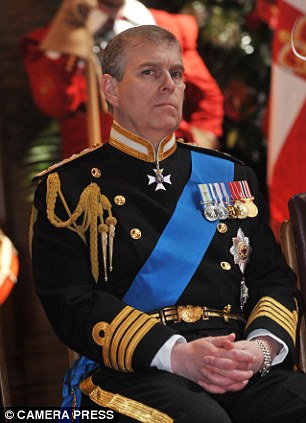 The imbalance of power between sexual abuse victim and perpetrator has been starkly highlighted again in the last few days following Jane Doe 3’s legal move which named Prince Andrew as one of the people she was “forced to have sexual relations with when she was a minor”. Prince Andrew (who presumably would be referred to as Andrew Albert Christian Edward in court – a theoretical point) was quickly able to utilise Buckingham Palace’s and his US business contacts media power to outnumber Jane Doe 3 in the press. The co-accused Harvard law professor and criminal defence attorney who advised convicted paedophile Jeffrey Epstein on how to respond to the FBI’s investigation, Alan Dershowitz, tells the public via the mainstream media that accusations against himself were “totally false and made up…this person has made this up out of cloth, maliciously and knowingly in order to extort money from Mr Epstein” and in reference to Prince Andrew “if she’s lied about me, which I know to an absolute certainty she has, she should not be believed about anyone else.” Dershowitz even threatened the lawyers who filed Jane Doe 3’s “carefully investigated” lawsuit with legal action to disbar them. Jane Doe 3’s response: “These types of aggressive attacks on me are exactly the reason why sexual abuse victims typically remain silent and the reason why I did for a long time. That trend should change. I’m not going to be bullied back into silence.”
Abusers have a number of advantages over their victims. An abuser in a position of power will have more as a result of their wealth, access to the media and the fact people tend to see them as part of the fabric of society. The general public will find it very difficult to believe that criminality might have occurred when the accused is the son of the woman they’ve watched deliver an annual message to her subjects at 3pm every Christmas Day since 1952. You could cut the cognitive dissonance with a knife.
A list of some of the perpetrator’s powers is set out below, but also some of the positive changes which I think/hope are happening now to gradually shift the balance of power from perpetrator to victim. Some of the powers are applicable to abusers in general, some more so to abusers in positions of power.
The perpetrator’s power
Some positive changes happening now which are hopefully starting to shift the balance of power towards the victim

 Wise people have told me in the past that contentious situations are more likely to be cock-up than conspiracy. I think they’re probably right, so I try not to join dots that aren’t necessarily there. But it’s difficult with the Government’s Child Sexual Abuse Inquiry. First the Home Office appoint Lady Butler-Sloss to lead the inquiry. Within a few days, diligent members of the public, press and parliament spot that her brother acted improperly as Attorney General over the Kincora Child Abuse Inquiry. After a build up of pressure Butler-Sloss finally quits as inquiry lead. Information and allegations emerge afterwards that suggest her brother may have actually committed abuse along with fellow members of the political elite. Lady Butler-Sloss may well end up feeling a sense of relief that she was forced to stand down. So the Home Office appoint Fiona Woolf as inquiry lead. Within a few days diligent members of the public, press and parliament spot that she has connections to Sir Leon Brittan who is pivotal to the allegations which have spurred the inquiry. A build up of pressure from these diligent individuals leads to Woolf being asked to clarify her connections with Lord Brittan before a select committee. She redrafts her written statement 7 times with the help of the Home Office to the shock of those dilegent members of the public, press and parliament. Meanwhile, those who were thinking Leon Brittan’s involvement was simply to make Geoffrey Dicken’s dossiers disappear are given a wake up call by Jim Hood MP who says in parliament that “The rumours that Sir Leon Brittan was involved with misconduct with children does not come as news to miners who were striking in 1984… miners were saying in the dock in magistrates’ courts throughout the strike that they objected to instructions coming from the home secretary when there were reports about child abuse being linked with that same home secretary.”
So, conspiracy or cock-up? Either way, I hope the Government has got the message that the public are paying close attention and neither will be tolerated.
 The following interview is with Rosie Campbell OBE who took up the Chief Executive Officer post at Leeds-based support agency Genesis in September 2013. Rosie has been heavily involved in researching, service development and sex work policy in the UK since 1995 and was one of the driving forces behind the ‘Merseyside Model’ which helped Merseyside Police achieve a 67% conviction rate for crimes of rape against sex workers compared to a national average conviction rate for rape of just 6.5% (2010 data).
Following academic work in Merseyside in the late 1990’s which drew on many different experiences connected to sex work to show that a one-dimensional policy approach would not work, Rosie went on to be involved in setting up the Linx Project and then to be coordinator at Armistead Street and Portside outreach and sex worker NHS support projects in Liverpool. Alongside that she was one of the founder members of the UK Network of Sex Work Projects in 1992 which she chaired for eight years. Rosie currently chairs the national advisory group for Ugly Mugs and is a director for Ugly Mugs in a voluntary capacity.
Genesis was set up 24 years ago and is the longest running support agency for sex workers in Leeds. Genesis offers street outreach services two nights a week in Leeds and outreach to indoor sex workers across the city, making contact with sex workers, offering health promotion and harm reduction interventions, and personal safety information, much of which has been developed in partnership with sex workers and expert organisations such as the Suzy Lamplugh Trust. Genesis also offers advice on a wide range of issues including sexual health, law on sex work, drug and alcohol issues, and housing and benefits which has been in particular demand following recent government policy changes. Genesis offers one to one support to sex workers in all sectors and can refer women and support them to access a wide range of agencies. Genesis works closely with West Yorkshire Police as part of the Genesis Leeds Ugly Mugs Scheme which helps to address crimes against sex workers.
————————————-
Q: What is your view of West Yorkshire Police’s strategy around sex work?
In general terms we can describe a policing approach towards prostitution as being on a sliding scale from enforcement-based at one end and protection-based at the other. Since joining Genesis in Leeds it became clear that the policing approach had for some years been predominantly enforcement-based, which meant the use of soliciting legislation and Anti-Social Behaviour Orders for street sex work. The use of ASBOs for street sex workers is something I’ve never supported because it is not in my view proportional. It doesn’t fit with the removal in the 1980’s of imprisonment as a penalty for soliciting – this was a critical step in acknowledging that this is a welfare issue and not one of criminal offending.
Enforcement-based approaches always make it more difficult to offer health and support services because, understandably, sex workers are more suspicious of anyone who they see as being from the authorities when an enforcement-based approach is being taken. Even if they do trust support projects they will be more wary of being identified and will want to move on from the area as soon as they see any police officers because they are fearful of arrest or other sanctions. This is a very difficult climate to deliver services in. There was a lot of shock at the Met’s raids on brothels last year. This kind of police tactic pushes sex workers into more danger.
It’s important to say that there will be marked differences in approach even between the towns and cities within a single police force’s area so I am only commenting on Leeds.
Q: Are there signs that West Yorkshire Police’s approach might be changing?
What is very encouraging is that with the new prostitution strategy in Leeds there is a move away from enforcement to a more proportionate response as recommended by the Association of Chief Police Officers, and there is a determination to improve the policing of crimes committed against sex workers and a real desire to build trust with sex workers.
A new strategic partnership framework on prostitution in Leeds which includes West Yorkshire Police, local authority and third sector agencies was agreed in April 2014. This was informed by consultation with a range of partners over many months and drafted following a scoping exercise led by Dr Kate Brown from York University which drew together existing data on sex work in Leeds, including the numbers of sex workers, the socio-demographic profile of sex workers in Leeds, what the main services were for them, criminal justice data and Ugly Mugs data. It established that the police approach was predominantly enforcement-based which is out of step with the national guidance that urges a staged approach with enforcement being reserved as the last recourse.
What I found when I arrived in Leeds was that the level of women reporting into our Ugly Mugs scheme wanting to make formal reports of crimes to the police was extremely low. That’s no surprise when there had been an enforcement-based approach for some years, it is difficult to build trust and enable reporting in such a context. When I first came to Leeds it reminded me of the culture in Liverpool in the late 1990’s. There was a very untrusting relationship between sex workers and the police. Sex workers thought they wouldn’t be believed when reporting a crime against them and may even be prosecuted themselves.
Fortunately, police officers taking a leading role in implementing the prostitution strategy have supported a more balanced approach in recent times and have been very committed to improving the policing of crimes committed against sex workers. The new strategy clearly states that crimes against sex workers will not be tolerated.
It is very challenging for police forces who are all working within a problematic legal framework. But despite this some are moving in the right direction and making real efforts to address crimes against sex workers, for example, Merseyside, Manchester and Lancashire.
Q: Are changes planned for how offender data is managed by West Yorkshire Police?
We re-launched Ugly Mugs across West Yorkshire in August this year. We know in the past that the information gathered has not always been recorded properly or has not always been processed effectively by West Yorkshire Police. WYP have reviewed and enhanced their intelligence pathways in response to this. Crimes against sex workers will have an Ugly Mugs flag added and West Yorkshire Police will actively interface with National Ugly Mugs to ensure intelligence is shared nationally to ensure mobile offenders are better managed and that mobile sex workers are better protected.
Q: It sounds like West Yorkshire Police are shifting in the right direction at a senior level, but it still seems down to individual officers as to whether victims get a good service or not as the BLAST interview showed?
In my view Leeds is in a period of change and there are some positive developments, but it’s still in the early stages of change. In my experience the changes in attitude towards sex workers and crimes against sex workers can take a long time. There was a long transition period in Merseyside for example, change did not happen overnight – it took over a decade. So we need to have some patience, but I’m certainly not trying to justify unacceptable policing or any poor conduct. When we think about the history of murders of sex workers in areas of West Yorkshire such as Bradford, and with Peter Sutcliffe’s crimes still casting a tragic shadow, I would have hoped to have seen the safety of sex workers as an absolute priority for many years.
Earlier in the year we delivered training to 200 police officers about the diversity among sex workers and their differing needs and experiences. It was clear from those sessions that officers had quite differing views about sex workers.
Q: Are you aware of any cases being referred to West Yorkshire Police’s Professional Standards Division?
I’m not personally aware of any since I joined Genesis. It is vital that every police force has routes to not only deal with unprofessional behaviour but also incivility. We have had a sex worker raise an issue of inappropriate language with us and we have taken that to the police. I’m confident that the managers of those officers have thoroughly investigated and dealt with the problem. I want to encourage sex workers to raise those issues with Genesis should they occur – I will deal with them head on as I have done in the past in Merseyside. But we need to do a lot more to build relationships with more sex workers, let them know their rights and encourage them to report any problems they encounter.
Q: When I first spoke to West Yorkshire Police about the Merseyside Model they didn’t know what it was – now in a recent letter from Mark Burns-Williamson (West Yorkshire’s Police & Crime Commissioner) the police force seems to be suggesting it has adopted the model in all but name?
Any force cannot say they have adopted the Merseyside Model until they take a primarily protection-based approach, treat crimes against sex workers as hate crimes and utilise specialist Independent Sexual Violence Advisors and sex work liaison police officers to increase the reporting and conviction rates. Some forces may have adopted elements of this approach. Merseyside Police Force is still the only force to have adopted the hate crime policy itself. The Police & Crime Commissioner’s letter perhaps indicates there isn’t yet a full understanding of the Merseyside Model within West Yorkshire Police. He rightly points to specialist services, including the STAR project who we have referred sex worker victims to and who have provided quality support. But from the available evidence, having a dedicated Independent Sexual Violence Advisor for sex workers in place would – as clearly demonstrated in Merseyside – have increased the reporting of crimes by sex workers, improved victim support for sex workers and kept sex workers better engaged in the criminal justice system from report to court. I have met with people from the PCC’s office before and talked about Genesis’ work in Leeds but I haven’t had the chance to talk in detail about the different elements of the Merseyside Model. I think there is work to do to more clearly communicate the elements that make up the approach and explain the benefits that come from adopting it.
The hate crime policy which is part of the Merseyside Model is critical, but on its own it won’t get the results. You also need sex work liaison police officers which originally saw success in Edinburgh in the 1990’s and later in Manchester and Merseyside, and for a move away from an enforcement response. As of May this year we have a prostitution liaison officer in Leeds to offer a first point of contact with sex workers and to build trust. The officer who has taken on this role is specially trained to deal with rape and sexual assault victims. She specifically has a non-enforcement role. She works to get to know people on the streets and we are also promoting her role to indoor sex workers. She’ll be the first point of contact for projects like Genesis and BLAST. We can offer her support to victims of harassment, rape and sexual assault and other crimes, whether to just talk, or to make a formal report if they wish.
It’s about giving sex workers rights in the same way other groups do. And this would mean that managing crimes against them is done in a slightly enhanced way and that there is enhanced support for the victims.
Q: Is it more helpful to use the term ‘sex worker’ or the term ‘prostitute’?
I use the term sex worker. ‘Work’ is an activity to generate income – it takes place under a range of conditions from free labour to forced labour so I don’t see the phrase as being loaded or excluding any particular experience or circumstances. Some people use the word prostitute in a non-loaded, non-stigmatising way, but some people use it in a very stigmatising way. They spit out the word, or variations of the word. The word prostitution has neutrality, but prostitute doesn’t. It’s obviously up to individuals who work in the sex industry to choose the term they want for themselves, e.g. sex worker, escort, prostitute, but policy-makers need to be mindful of how their language is interpreted and use appropriate and responsible language. For me it is critical I don’t use language that would further stigmatise a person.
————————————-
Footnote
Rosie’s PhD research has examined the Merseyside Police’s approach to treating crimes against sex workers as hate crimes. She argues that the experience of sex workers fit several key established definitions of hate crime, they are victims of targeted violence and abuse generated by prejudice and that a hate crime approach can lead to practical improvements in responses to crimes against sex workers and recognises the rights of sex workers protection and justice. Her work has been recently published in the chapter ‘Not Getting Away With It: Linking Sex Work and Hate Crime in Merseyside’ in Chakroborti, N and Garland, J (eds), ‘Responding to Hate Crime: The Case for Connecting Policy and Research’, The Policy Press, Bristol.

Liz Davies, Matthew Parris
A fascinating discussion between Matthew Parris (columnist and former Conservative politician) and Liz Davies (front-line child protection social worker from London Metropolitan University) about the forthcoming national inquiry into child sexual abuse was broadcast yesterday on the Spectator blog (transcript below). It was fascinating partly because of Liz Davies’ recounting of how her investigations into child abuse and murders of children were stopped by unknown senior people, and partly because of Matthew Parris’ refusal to accept that what Liz Davies was saying might be true. Although as Matthew Parris had just published a Spectator article called ‘What kind of idiot tries to stand in the way of a national child abuse panic? I do’ and subtitled ‘I know the rumours. I think they’re mostly nonsense. I don’t expect a fair hearing’ (pay-walled) he perhaps found it impossible to allow himself to be convinced by the evidence Liz Davies was setting out.
Putting Matthew Parris’s individual views aside, what I generally took from the discussion was a reminder that many people don’t yet accept that the organised sexual abuse of children has happened and is still happening, and that when the abuse is carried out by powerful and influential people it tends to get covered up, even after the abusers are dead.
We can’t expect the new CSA inquiry to solve this alone, but if it delivers what it is being set up to achieve then it should help push forward the further cultural change we need. We need to acknowledge the issue of organised CSA and find better ways to prevent it and tackle it when it does happen. Victims and survivors shouldn’t have to wait 20 years for a national inquiry – a National Police Investigation Team should be dealing swiftly with these cases and securing prosecutions. We really need to start listening to child protection experts like Liz Davies and Peter McKelvie.
Discussion on 10 July 2014:
Matthew Parris: It seems to me to very likely be an overheated conspiracy theory. There’s certainly a rush to judgement. It may or may not concern senior politicians 30 years ago. All we know is that Geoffrey Dickens, who was a delightful man – we all liked Geoffrey very much – but he was pretty nuts. He had lots of conspiracy theories. And he did believe Britain was in the grip of a huge paedophile ring involving very senior people in government. I think it highly unlikely that the Home Office would have willfully destroyed the documents that he gave to the Home Secretary. I don’t say we shouldn’t look into it. I just think everybody needs to calm down a little.
Presenter: Other inquiries, like Hillsborough have ended up being totally vindicated.
Matthew Parris: But the Hillsborough Inquiry was an inquiry by the police into themselves [sic]. If this new Home Office inquiry, which is an inquiry into two separate early inquiries, fails to find a conspiracy then I don’t think the people who think these conspiracies exist will be satisfied. They’ll then want another inquiry. But you can’t win discussions like this – with respect to Liz – anyone who says ‘calm down we don’t need another inquiry’ is always going to lose the discussion. And anyone who says ‘let’s at least try to get the truth of the matter and lay this to rest’ is always going to win the argument, and so you’ll get inquiry upon inquiry upon inquiry.
Presenter: I suppose Matthew is saying ‘let’s pause, reflect, and come back to this once the media storm has died down and see if we really need an overarching inquiry’?
Liz Davies: It doesn’t feel like a rush to me. I’ve waited 20 years since I became aware of major cover-ups and people interfering with my investigations when I was trying to protect children. And where instructions came from for those interferences I don’t know – I want some answers.
Presenter: You knew about these particular allegations?
Liz Davies: I was investigating many, many allegations of sexual assaults of children and murders of children. I was working with the police and then suddenly the police were taken off the investigations into the most serious crimes you can imagine against multiple numbers of children. I had to then go to the civil courts to try and protect them as best I could, but there were no prosecutions against the perpetrators. Thanks to social media I’ve recently been able to contact those police officers who were removed from the investigations and they’ve told me their instructions came from very senior police officers. Who’s going to investigate that? I’ve no means to do it. Why did senior police shut down my investigations into the abuse and murders of children? I want to know that – I’ve waited 20 years. I’m not going to stop – these are incredibly serious matters.
Presenter: Why do you think it is we have to wait 30 years before we have an inquiry into these things?
Liz Davies: More information’s come to light now. Partly through social media a lot more victims and survivors have come forward. My inbox is full every day of people contacting me with stories to tell. But our biggest problem now is having enough police to investigate reports. Operation Fernbridge has only got 7 officers.
Presenter: So what you’d like is a truly overarching inquiry looking not just into politicians but every single child abuse case where justice has not been achieved.
Liz Davies: People like me who’ve had investigations shut down want answers to those cases. I’ve tried for 20 years; I’ve raised the issues through the media. I’ve tried everything and got nowhere. I want to know who’s behind it all. It’s not all about politicians – it’s about abuse of power at the highest level and I want to know who those people are.
Matthew Parris: Well, the highest level is Ministers and you seem to be suggesting they are involved. I personally doubt it but these things have happened. But when you say these investigations were shut down that’s not a very neutral phrase – investigations are ‘not proceeded with’ by the police every day. You say they were shut down at the highest level but the senior police officer responsible will have taken a decision not to proceed. There may be a sinister explanation but it may just be that there wasn’t sufficient evidence to proceed.
Liz Davies: I’d been working on cases for months. I’m a very experienced investigator, and I’ve worked with the police for many years – I know when my investigation into very serious crimes has been closed down; when I go to work one day and I’m told by my senior manager “you will no longer have any police with you on these investigations from this day on”.
Presenter: Could that be because of a lack of evidence?
Liz Davies: Absolutely not. We were in the middle of collating a mass of evidence. I had to get some children right out of London to secret venues to protect them. The level of investigation was very high and complex and I knew exactly what I was dealing with. Children were being taken all over the country to be abused in different locations by different people.
Presenter: Do you have any confidence that the new inquiry will put these matters to rest?
Liz Davies: No, but I might be able to ask some questions – there’s nowhere else for me to go. In Islington, 2 or 3 years before I was working there and raising serious issues, Geoffrey Dickens was also raising serious issues – that’s another dossier which no one is currently looking for. That one went to Douglas Hurd who was Home Secretary at that time.
Matthew Parris: All these children who have, as you say, been taken to different locations to be abused by senior people, you’ll presumably be able to find some of them to testify?
Liz Davies: Yes, they will of course come and testify, but we need to have a lot of things in place – support systems, witness protection. An inquiry won’t solve this – it’ll get us a bit further. What I’ve argued for 20 years is that we need a National Police Investigation Team because we need somewhere that people can go where the connections are made across the country. When I went to Scotland Yard with my evidence for Islington I was used by Scotland Yard to go all over the country to liaise with other investigations like North Wales and so on – nobody in the police was connecting it all up. I was hearing many names – I won’t say any of the names here, but many names – I was hearing them in the different places I was visiting. Nobody has ever joined those dots up.
Matthew Parris: I won’t ask you for names but I will ask you – you do have names, and these are very senior people in the world of politics and you are reasonably confident that they have been involved in some of these activities?
Liz Davies: Yes. Some of the names that have come out recently, like Cyril Smith, were no surprise to me. When he died I wondered if anything would come out then. I heard his name for many, many years.
Matthew Parris: So had I. Although I hadn’t entirely believed – I’d thought perhaps whatever he had done hadn’t been that serious or had been exaggerated. So you are right – it is possible to be wrong about people, but that doesn’t mean there is great national conspiracy involving top people all over the country transporting children to secret locations. I would need a lot of convincing.
Liz Davies: What we need is a proper police investigation into the allegations we know about that haven’t been properly investigated or have been shut down over the years. My experience was you could so much, get to a certain level and it all got shut down, and I’ve had that time and again. We need more police resources, more social workers. And can I just say that what we’re talking about is organised abuse of children – and last year this government got rid of all the statutory guidance on this. They got rid of the definition of ‘organised child abuse’ and the means of investigating it. We’re losing our tools for dealing with this.
Matthew Parris: I’m not here to defend Ministers but I don’t think it’s fair to say we got rid of all the means of investigating organised abuse.
Liz Davies: They’ve got rid of the policy that stated how police and other agencies should investigate organised child abuse.
Matthew Parris: Who are these senior police who you say are consistently shutting down every investigation the moment you get somewhere? It seems unfeasible in this day and age that a chief constable in a case where there is evidence of appalling abuse to young children would stop the investigations because they were under pressure from some national network.
Liz Davies: Well, you’d have to ask them wouldn’t you? I wasn’t operating at that level. I don’t know who these people are. All I can tell you is what I know absolutely happened in my role, being paid to protect children, and not being able to protect them in the way I was expected to.
 A national inquiry into the failings of state and non-state bodies to protect children from abuse was announced by the Home Secretary this afternoon. Over 140 MPs demanded the inquiry (following on from Yvette Cooper MP’s initial call 18 months ago) and an online petition reached over 70,000 signatures in its first couple of days. The inquiry was called for because institutions have consistently put their own reputations and survival before the protection of children, particularly children within the care system who are the most vulnerable to organised child abuse and trafficking. While there have been a growing number of investigations of late, such as the NHS reports into Jimmy Savile, these are all narrow in scope and do not look at why there were persistent failures to intervene, stop the abuse and prosecute the offenders.
Home Secretary Theresa May set out three principles for the review: that it should not get in the way of making successful prosecutions; that there should be maximum transparency; and that wherever there were failures they should be exposed and lessons learned. The Home Secretary said the latter should include looking widely at child protection issues including the proposal of legally mandated reporting of suspected abuse.
In addition to the main inquiry, Peter Wanless from the NSPCC and a senior legal figure will look again at the handling of the dossier of evidence and allegations handed to then Home Secretary Sir Leon Brittan by Geoffrey Dickens MP – a dossier which Dickens told friends would “blow the lid off” the lives of powerful and famous child abusers. It came as a surprise to many MPs and observers that the disappearance of 114 Home Office files – something which appeared to be a very recent revelation – had actually been made ‘public’ in a previous Parliamentary Question. Wanless will also look again at the allegations that the Home Office funded activity by the Paedophile Information Exchange.
The main inquiry will look at failures by state and non-state bodies to deliver their duty of care of protecting children and will begin as soon as possible. Although it cannot feasibly conclude before the 2015 general election it will provide an update to Parliament before May 2015.
However, while the announcement of an inquiry is momentous, there is no guarantee that it will fully address the questions the MPs and the public want answered. The Hillsborough-style inquiry will have far more scope than all the individual investigations that have taken place to date, but the scope is not limitless. And it is these limits which will ultimately determine the success or failure of the inquiry.
The Hillsborough Inquiry’s terms of reference allowed it to look at:
…all documentation held by central government, local government and other public agencies (the police, ambulance service, fire service, coroner and Sheffield City Council) that relates directly to events surrounding the Hillsborough tragedy up to and including the Taylor report, the Lord Stuart-Smith review of Hillsborough papers in 1998-99 and the private prosecution in 2000.
The timeframe is one of the key constraints that may hamper the new inquiry. Will the review only look at the 1970’s and 80’s? If so, this would exclude criminal activity right up until the current day. But the constraint on what information can be released to the panel will surely be the most telling.
In relation to pre-1997 government information, the Hillsborough Inquiry Panel was not allowed to see information which indicated the views of ministers (such as Cabinet material or policy advice to ministers) without first consulting representatives of that administration. Tom Watson, Yvette Cooper and other MPs pressed the Home Secretary today on whether the inquiry would have access to all information, including police and secret service papers, and information covered by the Official Secrets Act. The Home Secretary said she wanted the “fullest possible access” but could not guarantee this at the present moment – the legality would have to be established. With MI5 heavily involved in the cover-up of Cyril Smith MP’s abuse for example, access to all evidence is fundamental to uncovering the truth. Will the customs officer who intercepted a video tape containing footage of child sexual abuse found on a senior Tory MP be allowed to give evidence even though he was made to sign the Official Secrets Act? If parties have a right to be consulted on pre-1997 government information then what chances are there of them disclosing anything that may implicate themselves or their colleagues? Remember the huge fight David Steel put up to prevent it being known that he was the person who nominated Cyril Smith for a knighthood even though he had been told of the MP’s abuse of children? David Steels actions were clearly very embarrassing for him – and indeed he should be deeply ashamed – but it was not a criminal act. If it was he would surely have fought even harder.
We will have to wait for the Inquiry’s terms of reference which will be drafted once the panel lead is in place to see if the devil is in the detail (or whether the detail allows the devil to escape). The endless delays of the Chilcot Inquiry may be a better indicator of what the new child sexual abuse inquiry will be like than the Hillsborough Inquiry which focused on the police and never threatened the establishment.
@cockburn_john 114 now. Please add my name.
— Hilary Benn MP (@hilarybennmp) June 27, 2014
On Friday evening, Hilary Benn MP added his name to the growing list of MPs from across the political spectrum who want a national inquiry into historical cases of children sexual abuse.
The call for a national inquiry was first made by Yvette Cooper MP in November 2012 following Home Secretary, Theresa May’s reopening of the investigation into child sexual abuse at North Wales children’s homes. But it was a recent cross-party letter to the Home Secretary signed by 7 MPs (Tim Loughton, Zac Goldsmith, Tom Watson, Simon Danczuk, John Hemming, Tess Munt, and Caroline Lucas) which kick-started the current campaign which has so far led to well over 100 MPs stepping forward in support of the inquiry. Although it is for Members of Parliament to make the decision, members of the Lords have also come forward in support, and the British Association of Social Workers has asked its 15,000 members to lobby their MPs to support the inquiry.
The pressure continues to build on the Government to agree to the inquiry as members of the shadow cabinet, including Andy Burnham and now also Hilary Benn, join the call. Following Health Secretary Jeremy Hunt’s apology on Thursday to victims for government and NHS failures highlighted in the Savile reports, Andy Burnham challenged Jeremy Hunt that the reports were “effectively the hospitals investigating themselves”. Burnham called for an independent review, akin to the Hillsborough inquiry, into why there was “such large-scale, institutional failure to stop these abhorrent crimes.”
The NHS Leeds report into Jimmy Savile’s crimes is a valuable piece of the jigsaw but the scope of all of these individual reports cannot answer the critical question of why it was that time and time again the police and other authorities had evidence of organised sexual abuse of children but failed to stop the abuse and bring the perpetrators to justice.
In MP Simon Danczuk’s book, Smile for the Camera, he provides damning evidence of how the Westminster elite were able to work with the police and MI5 to ensure Cyril Smith MP was never brought to justice – “There was a network at the highest level that was out to protect him at every turn”. And there are many other cases, such as the disappearance of a dossier of evidence about powerful and politically connected paedophiles shared with a previous Home Secretary by the late Geoffrey Dickens MP, and the failure to properly investigate and bring abusers to justice in the Elm Guest House and Grafton Close Children’s Home cases.
Please write to your MP if they are yet to state their position on the call for a national inquiry into historical child abuse.

The Elland Road Park & Ride Scheme, 10am on a Friday. There are some cars on the far side if you look closely.
I was kind of glad when Leeds City Council finally admitted that Beeston residents wouldn’t get anything out of the Elland Road Park & Ride scheme which has been thrust upon them. But it turns out they are wrong. There is something very tangible in this for local residents: cheaper travel into the city centre.
If you catch one of the First Bus services along Elland Road you’ll pay a standard £2.10 into the city centre. Day tickets are available but these are still more expensive than the standard £3 ticket on offer from the Park & Ride. And up to three children can travel free from the Park & Ride when accompanied by a fare-paying adult, whereas First Bus will charge over-5’s half-fare, which explains why the lady with the two kids who gets the bus at the same time as me always hands the driver a tenner for their collective fairs.
Before local residents get in their cars and drive over the road to the Park & Ride to take advantage of the cheaper travel they should note that Metro have confirmed that customers don’t need to drive a vehicle into the Park & Ride to use the bus service. Residents may want to think of the service as “Walk & Ride” instead.
Not only are the fares cheaper at the Park & Ride, but you’ll also get to travel on a new bus and have a seat because very few people are using the Park & Ride. The photo above was taken at 10am today (a Friday) when you’d expect it to be full of commuter cars. It is early days of course, but perhaps the poor location of the site – as repeatedly pointed out to the Council, including in an expert report they themselves commissioned – is proving to be an issue.
It might also be related to the Council’s insistence on linking the Park & Ride with Leeds United – their city centre adverts say “Park and Ride and Shoot into town” with a silhouette of a stadium in the background – even though the Park & Ride is closed on match days.
The Council also made the false link between Leeds United and the Park & Ride in their consultation response to residents in which they said, “The park and ride service at the Reading Madejski Stadium allegedly attracts supporters to arrive early and go into town before the match so park and ride here [Elland Road] could also make some contribution to reducing the match day congestion.” After some discussion they admitted that their Madejski Stadium point was entirely based on a comment from “Mark a Portsmouth Fan” on this football fan website.
I asked if the Council’s research showed what it was that Reading fans were heading into to town for before the game – a pre-match pint perhaps? There are plenty of pubs near Elland Road stadium so there is no need for people to travel away from the stadium for a drink. Leeds United fans will be pleased to know that the Council jumped to their defence by misinterpreting my point and saying, “We would be stereotyping all football supporters if we were to assume that all they did was to consume alcohol.” But what to think when the forum that the very influential “Mark a Portsmouth Fan” frequents says “Pubs near the Madejski stadium are rare, so most fans have recommended Reading town centre for a pre-match drink”? All of this is of course irrelevant because (drum roll, fanfare, fireworks)… the Elland Road Park & Ride is not open on match days.


 What Can I Do About It?